Industrial gear failure can bring entire operations to a halt. In many cases, especially in older plants or legacy equipment environments, original drawings are no longer available. This raises a critical question. Can a worn or damaged gear be reverse engineered accurately without design documentation?
The answer is yes, provided the correct measurement processes, machining capability and engineering knowledge are in place.
Why Gears Fail in Heavy Industrial Applications
Gears in mining, rail and manufacturing environments operate under high torque and continuous load. Over time, gear teeth experience wear, pitting, cracking and deformation.
Common causes of gear failure include misalignment, inadequate lubrication, contamination, overload conditions and improper material selection.
When a gear fails and drawings are unavailable, many operators fear extended downtime. However, reverse engineering offers a practical and reliable solution.
How Reverse Engineering of Gears Works
Reverse engineering begins with a detailed strip and inspect process. The worn gear is measured to determine key specifications such as:
- Module or diametral pitch
- Pressure angle
- Tooth profile and geometry
- Face width
- Bore and key dimensions
- Material composition
Advanced measurement tools allow engineers to identify the correct geometry even when wear is present.
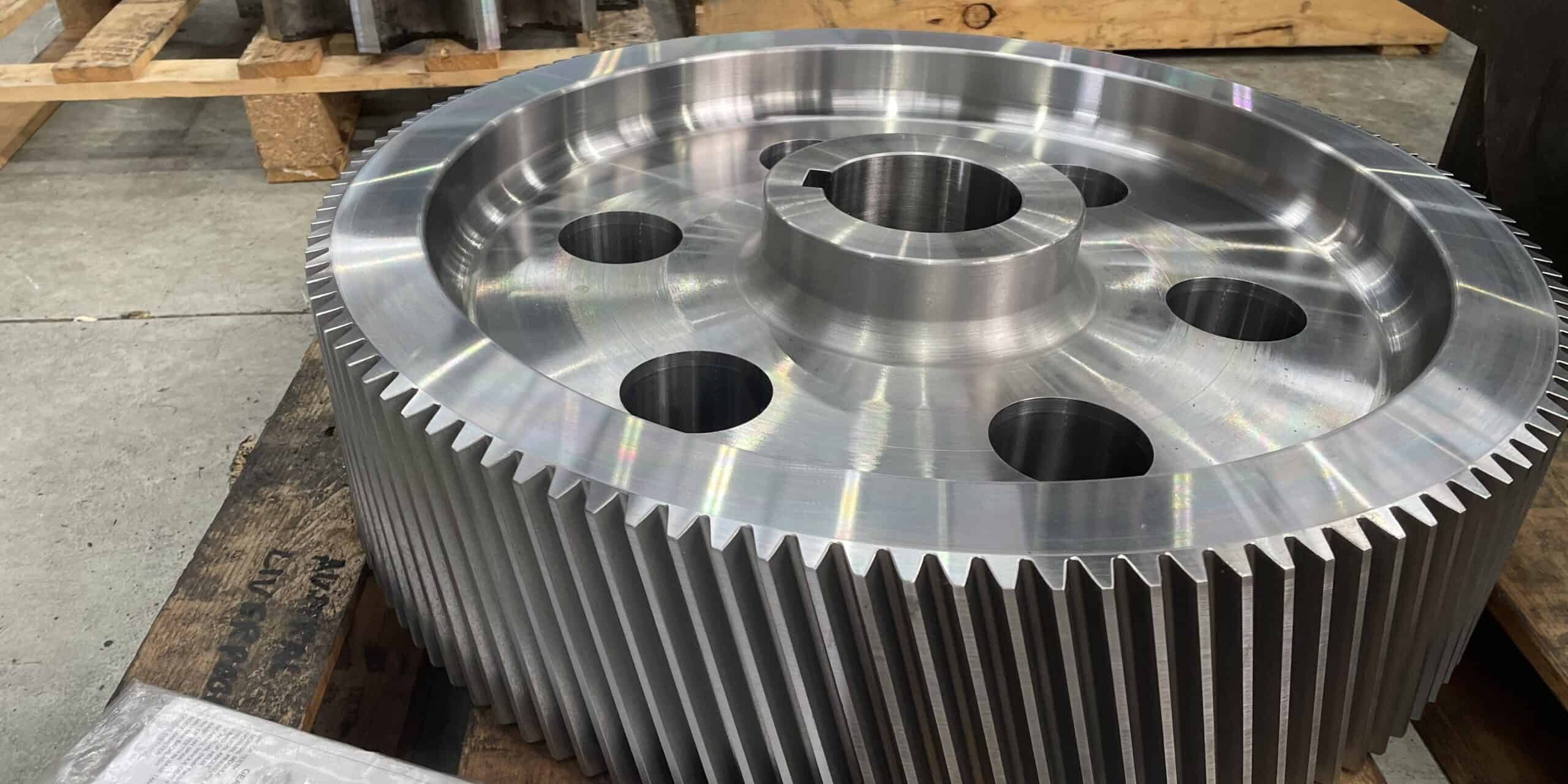
Once specifications are confirmed, CNC gear cutting equipment can manufacture a replacement component that matches the original operational requirements.
Material Selection and Hardness Verification
In addition to geometry, material grade and hardness are critical for durability. Reverse engineering includes material testing and hardness verification to ensure the new gear meets the load demands of the application.
This is particularly important for high torque mining conveyor drives, rail transmission systems and heavy industrial gearboxes.
What Types of Gears Can Be Reverse Engineered?
With appropriate capability, the following components can be reverse engineered:
- Spur gears
- Helical gears
- Wormshafts
- Wormwheels
- Conveyor sprockets
- Drive sprockets
Gears up to 1 metre in diameter can be manufactured depending on module and pitch requirements.
Benefits of Reverse Engineering Over OEM Replacement
Ordering a replacement gear from an OEM may involve long lead times and high costs. Reverse engineering locally can significantly reduce downtime and maintain production schedules.
Benefits include:
- Faster turnaround
- Reduced procurement complexity
- Local quality control
- Compatibility with existing assemblies
In breakdown situations, this speed can prevent extended plant shutdowns.
Ensuring Accuracy and Reliability
Reverse engineered gears must meet strict tolerances to ensure correct meshing and load distribution. Precision machining and inspection are essential to avoid premature failure.
Professional gear manufacturing facilities verify:
- Tooth profile accuracy
- Concentricity
- Bore alignment
- Surface finish
This ensures the replacement gear performs reliably once installed.
Final Thoughts
Yes, it is entirely possible to reverse engineer a worn gear without original drawings. With accurate measurement, material verification and CNC gear cutting capability, industrial operators can restore drivetrain systems quickly and reliably.