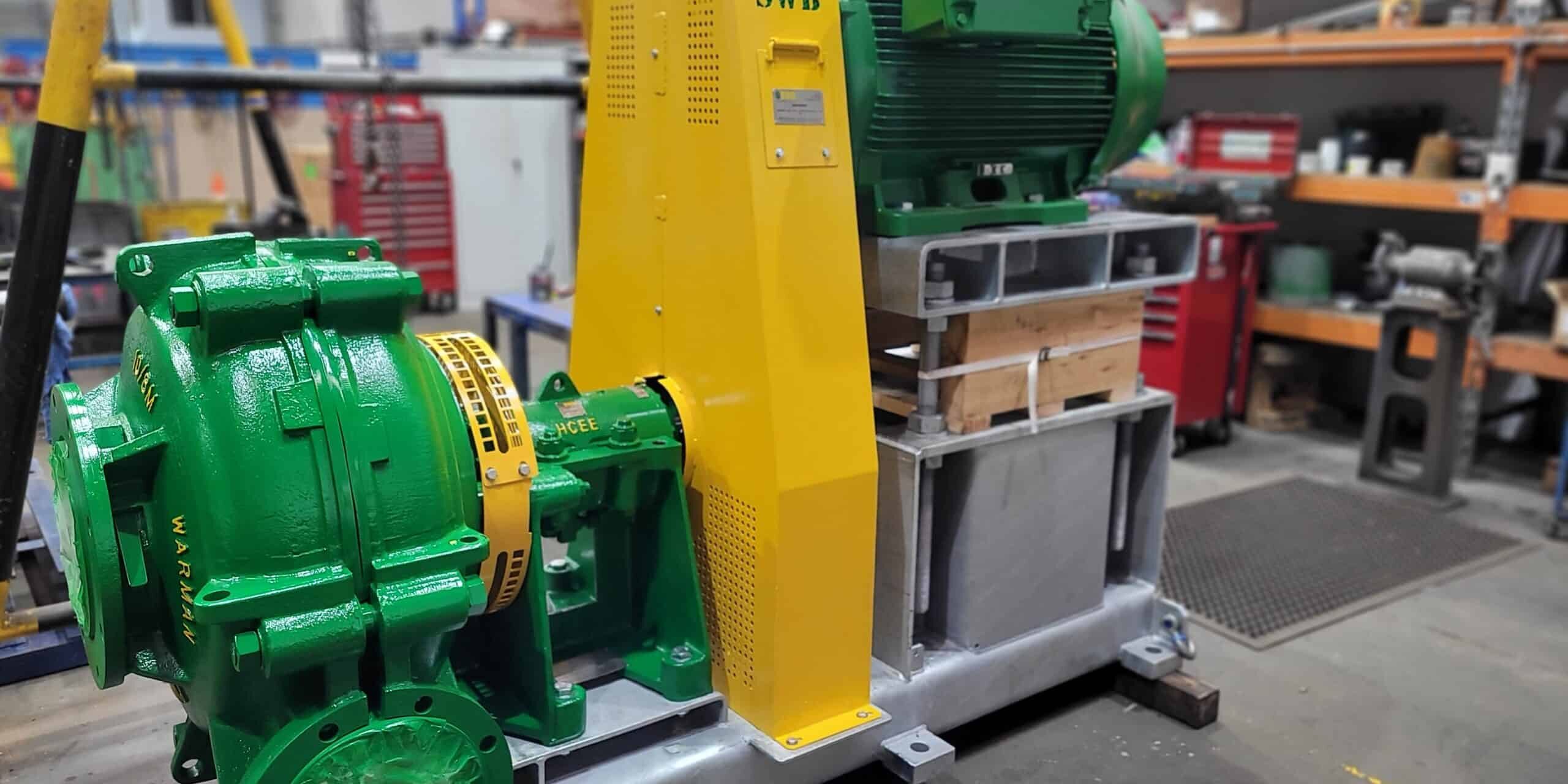
Industrial pump housings are expensive, heavy and often deeply integrated into critical process infrastructure. When wear, distortion or misalignment occurs, many operators assume full replacement is the only solution. In reality, precision machining and engineered refurbishment can often restore a pump housing to OEM specifications at a fraction of the cost.
Understanding when and how pump housings can be repaired is critical for maintenance managers who are responsible for minimising downtime and controlling capital expenditure.
Why Pump Housings Fail in Heavy Industry
Pump housings in mining, water utilities and industrial processing plants operate under constant mechanical and hydraulic stress. Over time, this can lead to dimensional wear and structural fatigue.
Common causes of housing failure include bearing bore wear, shaft misalignment, corrosion from aggressive fluids, housing distortion due to thermal cycling and damage from previous incorrect repairs.
When bearing seats lose concentricity or alignment, vibration levels increase. This leads to uneven load distribution, premature bearing failure, seal damage and reduced pump efficiency.
Can a Pump Housing Be Machined Instead of Replaced?
In many cases, yes.
Large industrial pump housings can often be restored through precision machining techniques such as horizontal boring or line boring. These processes restore dimensional accuracy and alignment without the need to replace the entire casting.
A structured repair process typically includes:
• Full strip and assess inspection
• Dimensional measurement of critical surfaces
• Non-destructive testing to identify cracks or fatigue
• Horizontal line boring to restore bearing fits
• Machining of mating faces and alignment surfaces
• Controlled reassembly and precision alignment
When completed correctly, the refurbished housing performs to OEM tolerances and can return to service with restored reliability.
What Is Horizontal Line Boring?
Horizontal line boring is a machining process used to restore internal bores in large housings such as split case pumps and slurry pumps. It ensures concentricity between bearing seats and shaft centres.
The process involves aligning a precision boring bar through the housing, removing worn material and restoring the correct diameter and alignment.
Correct bore alignment is critical for maintaining proper shaft geometry and reducing vibration. Even small deviations can result in load imbalance and shortened bearing life.
When Should You Replace Instead of Repair?
Not all housings are suitable for machining refurbishment. Replacement may be required where structural cracking is present, corrosion has compromised the casting integrity or excessive material removal would weaken the component.
An experienced engineering team will assess wall thickness, structural condition and dimensional recoverability before recommending repair.
Cost Benefits of Machining vs Replacement
Replacing a large industrial pump housing involves significant material cost, extended manufacturing lead times and logistical complexity.
Machining and refurbishment can:
• Reduce capital expenditure
• Shorten downtime
• Extend asset lifecycle
• Improve alignment and performance
For mining and processing facilities, the financial impact of reduced downtime alone can justify engineered refurbishment.
Improving Long-Term Equipment Reliability
A proper pump housing repair is not simply about restoring dimensions. It should include investigation into root causes of failure.
This may involve vibration analysis, alignment correction, review of bearing selection and lubrication system evaluation. By combining heavy machining with failure analysis, operators reduce the risk of repeat breakdowns.
Final Thoughts
Large industrial pump housings do not automatically require replacement when wear or misalignment occurs. With appropriate machining capacity and engineering expertise, many housings can be restored to OEM tolerance levels, improving reliability while significantly reducing cost and downtime.